Notes from
the forge.
Field notes and essays on metadata-driven platforms, declarative architecture, business automation, and the slow death of hand-rolled CRUD.
Supabase Builds Your Backend — Not Your Back Office
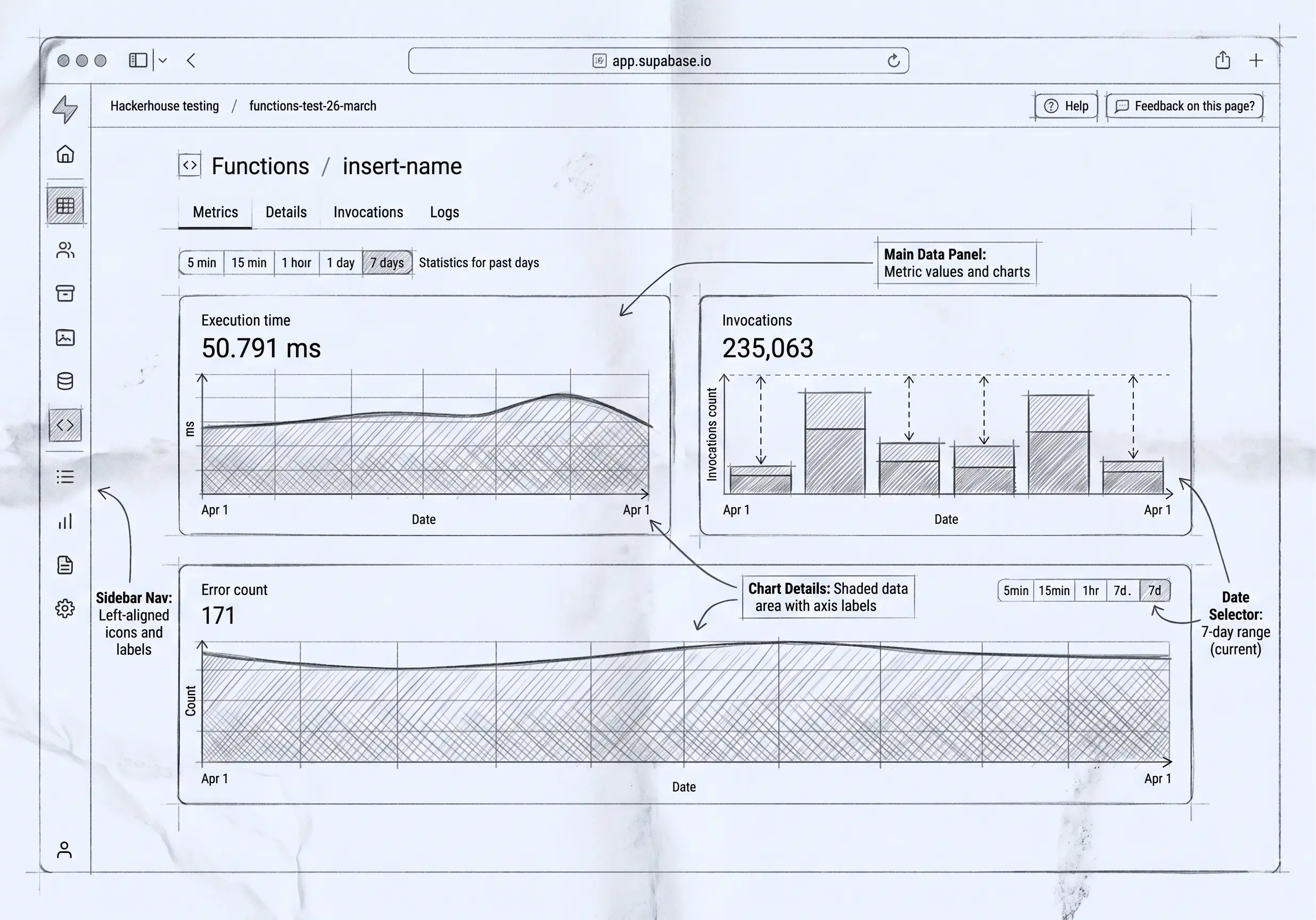
Supabase gives you a backend: Postgres, auth, APIs, storage, realtime. What it deliberately doesn't give you is the internal operational app your team runs the business on. Here's the gap, and the cleanest ways to fill it.
More from the forge

Audit Trail and Row-Level Security, Built In — Not a Premium Tier
On most platforms, a full audit log and granular access control are the expensive add-on. In dForge they're the floor: every change captured with before/after values, and row-, column-, and operation-level security applied on every request.

Can I Build Billing Software That Fits How My Business Actually Invoices?
Spreadsheets lose track of what's paid, and packaged billing tools assume an invoice shape and a workflow that aren't yours. The third path: start from a real invoicing and AR/AP foundation, shape it to how you bill, and own the database underneath.

Can I Build a CRM That Fits Exactly How My Business Sells?
Packaged CRM ships with someone else's sales process baked into the schema. Here's the third path between bending a rigid CRM and building one from scratch: start from a real CRM foundation, shape the model to how you actually sell — and own the database underneath.

Can I Build an HR System That Fits How My Company Actually Works?
Packaged HRIS tools assume an org structure, leave policies, and workflows that aren't yours — and spreadsheets lose people's data in a dozen tabs. The third path: start from a real HR foundation, shape it to your company, and own the database underneath.

Can I Build Inventory Software That Matches How My Stock Actually Moves?
Spreadsheets break and packaged inventory apps assume one warehouse, fixed units, and a stock flow that isn't yours. The third path: start from a real warehouse-and-procurement foundation, shape it to how your stock actually moves — and own the database underneath.

The Lock-In Test: 5 Questions to Ask Before You Sign a Low-Code Contract
Vendor lock-in is decided by architecture, not the contract — and the demo never shows you the exit. Five questions that reveal, before you commit, whether you'll actually own what you build on a low-code or no-code platform.
Only You Own Your Data: How dForge Avoids Low-Code Vendor Lock-In
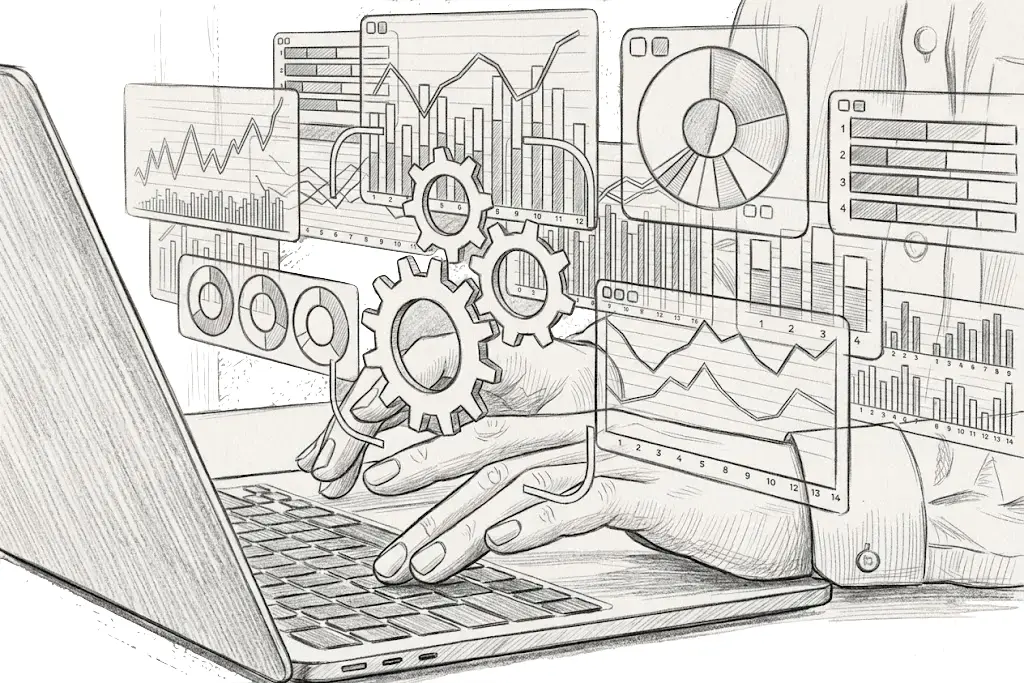
Most low-code platforms own your data as much as you do. dForge doesn't. Your data and files live in a standard PostgreSQL database and a plain file store you can back up, move, and hand to your own developers — here's exactly where that line sits, and where it doesn't.
Dashboards That Follow You, Not the Org
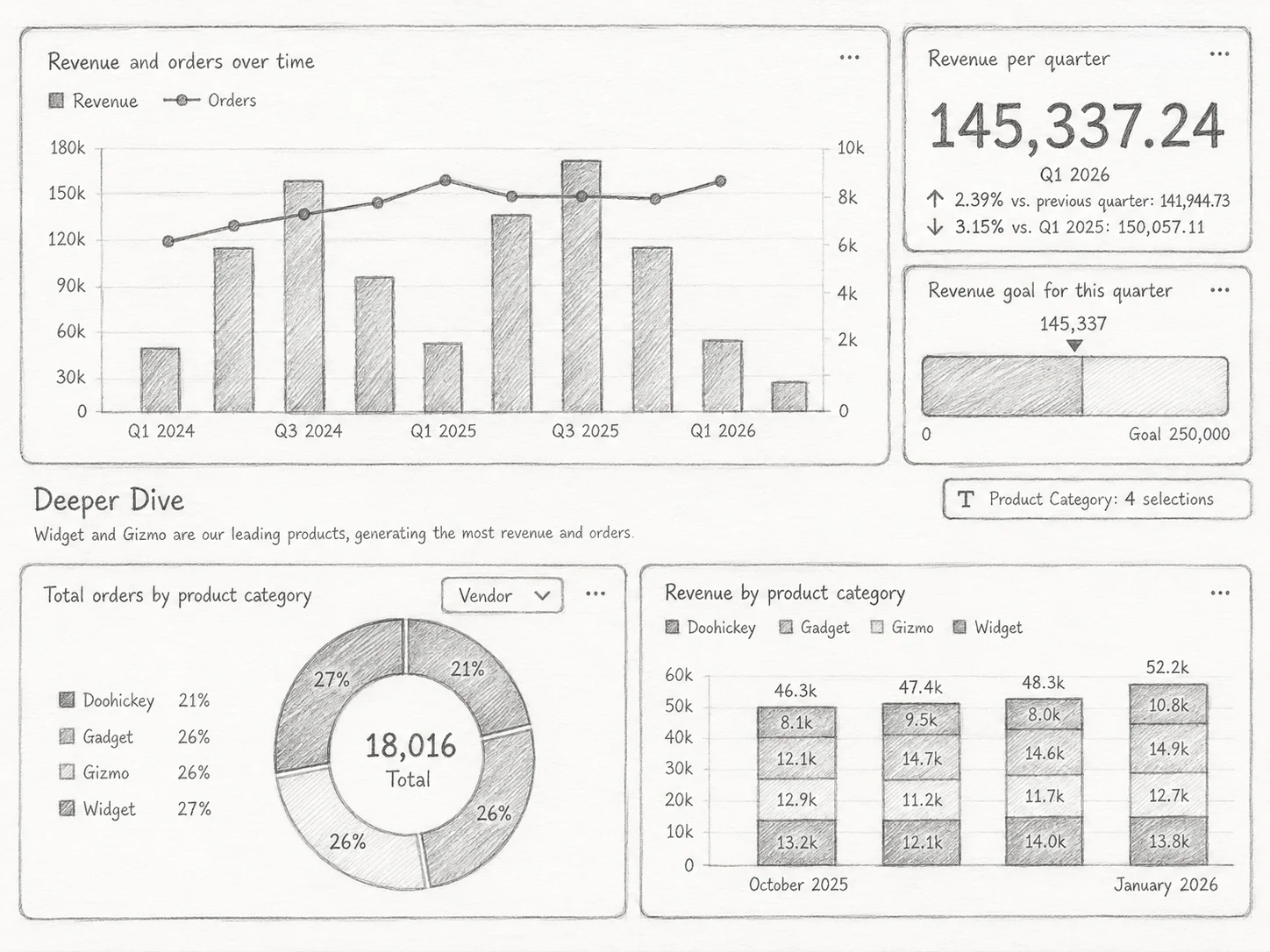
Most dashboards force a choice: one rigid view for everyone, or a personal BI tool that quietly bypasses your permissions. dForge dashboards are per-user — ship a default, fork it the moment you edit, and pin tiles from anywhere into a home view where every tile still runs under its folder's security.

Generated vs Hand-Built: The Hidden Cost of UI Builders
UI builders like Retool, Budibase, and Tooljet let you draw screens by hand. dForge generates them from a model. Here's why that architectural difference decides how consistent, secure, and maintainable your app is two years from now.

Reports Without a Developer — and Without a Data Leak
In most systems, a new report means a ticket and a wait, or a BI tool bolted on with a service account that quietly bypasses your permissions. dForge lets users build the reports and dashboards they actually need — and a report can never show data the user couldn't already see.
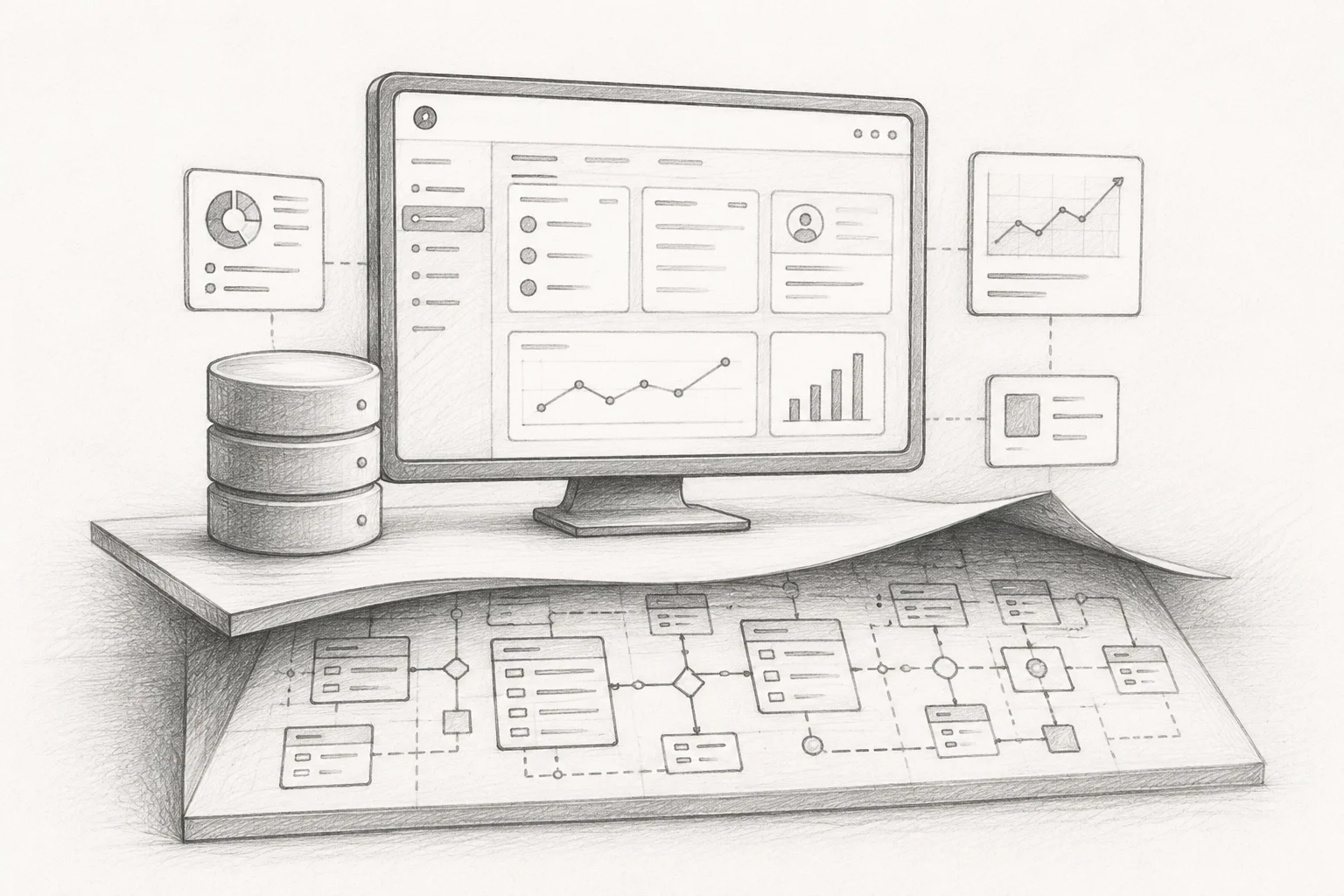
Configuring Your CRM Isn't the Same as Owning the Model
Packaged CRMs are good and highly configurable. The real limit a growing business hits is not a missing feature, but the gap between adjusting a vendor's model and owning your own.
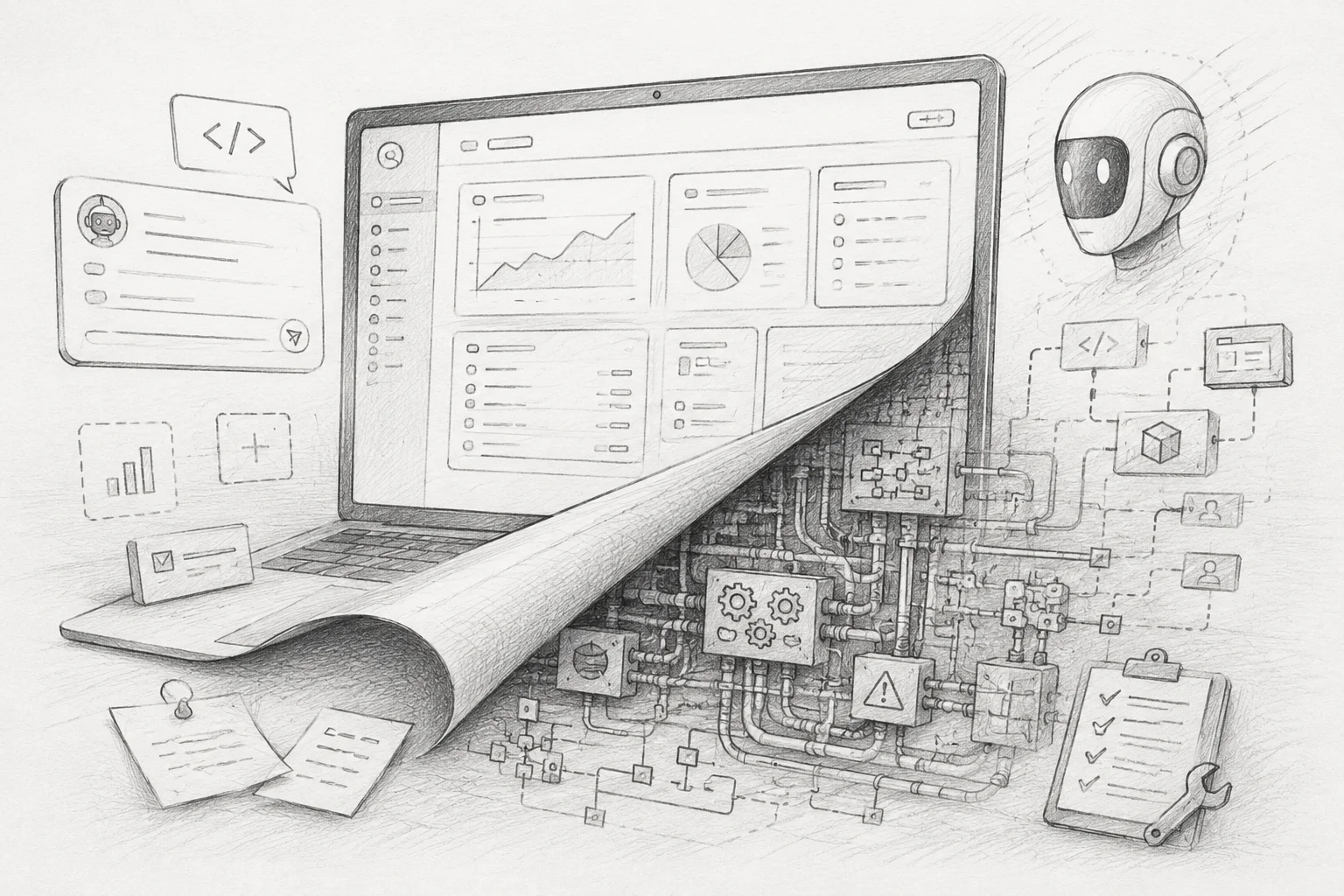
AI Made Internal Tools Easy to Build. Keeping Them Alive Is the Hard Part.
AI lets the people who understand a workflow build the tools that run it. The hard part is keeping them alive. What makes an internal tool durable, and how dForge approaches it.
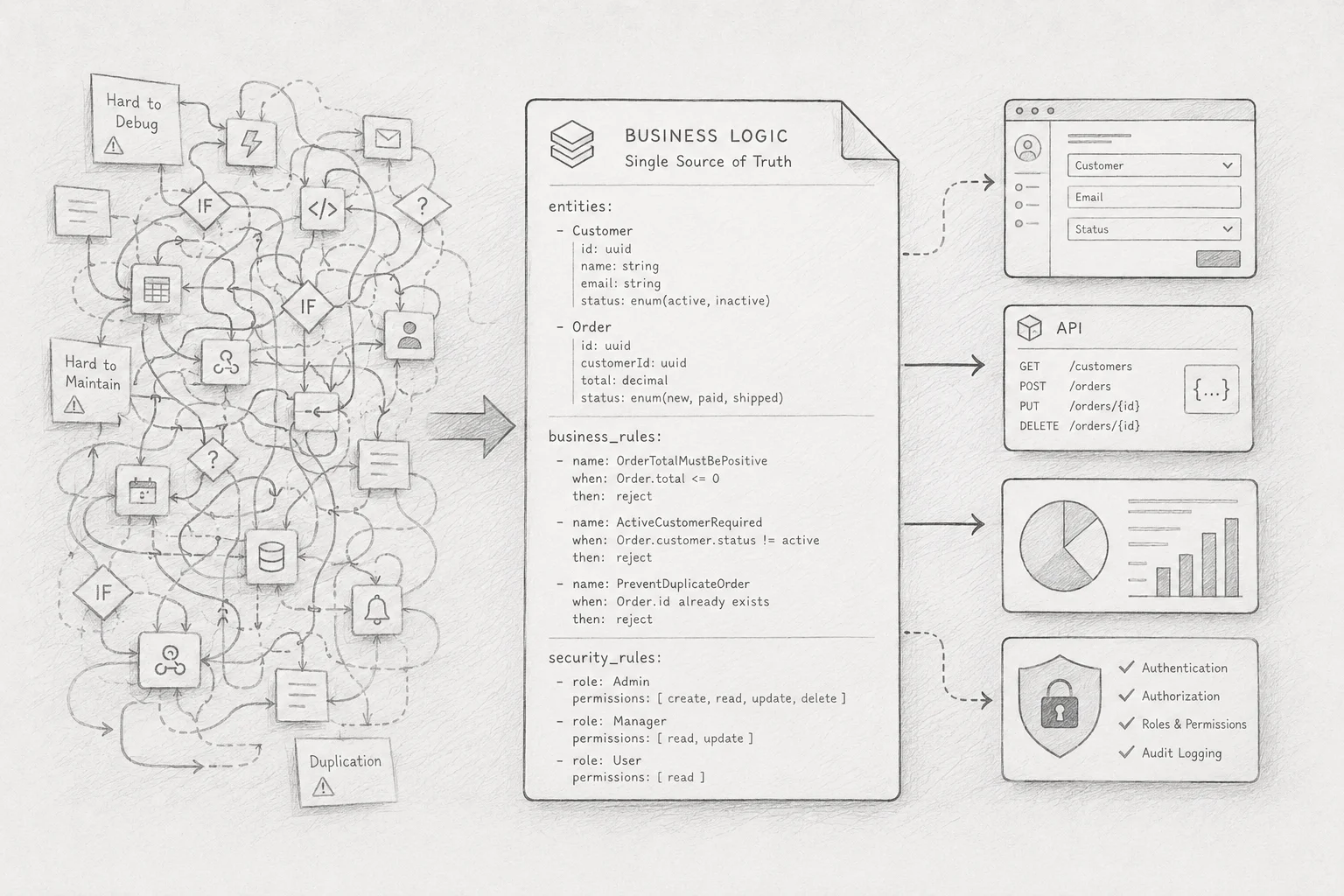
Beyond No-Code: Why Business Logic Should Live Separately
Exploring why separating business logic from technical infrastructure is the key to scalable, maintainable enterprise applications
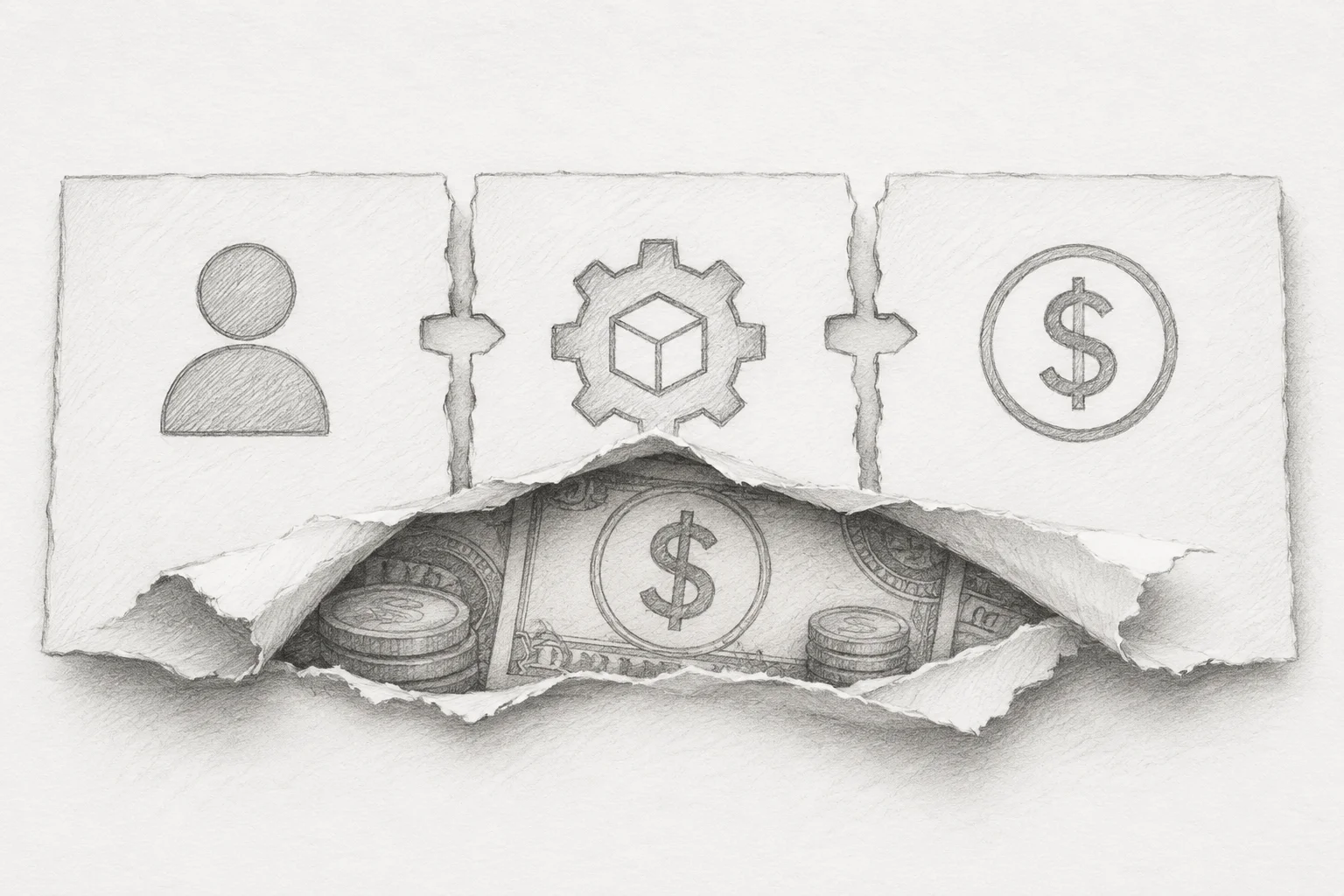
The Hidden Costs of Departmental Silos in Enterprise Software
How isolated departmental systems drain resources, create inefficiencies, and hold back business growth
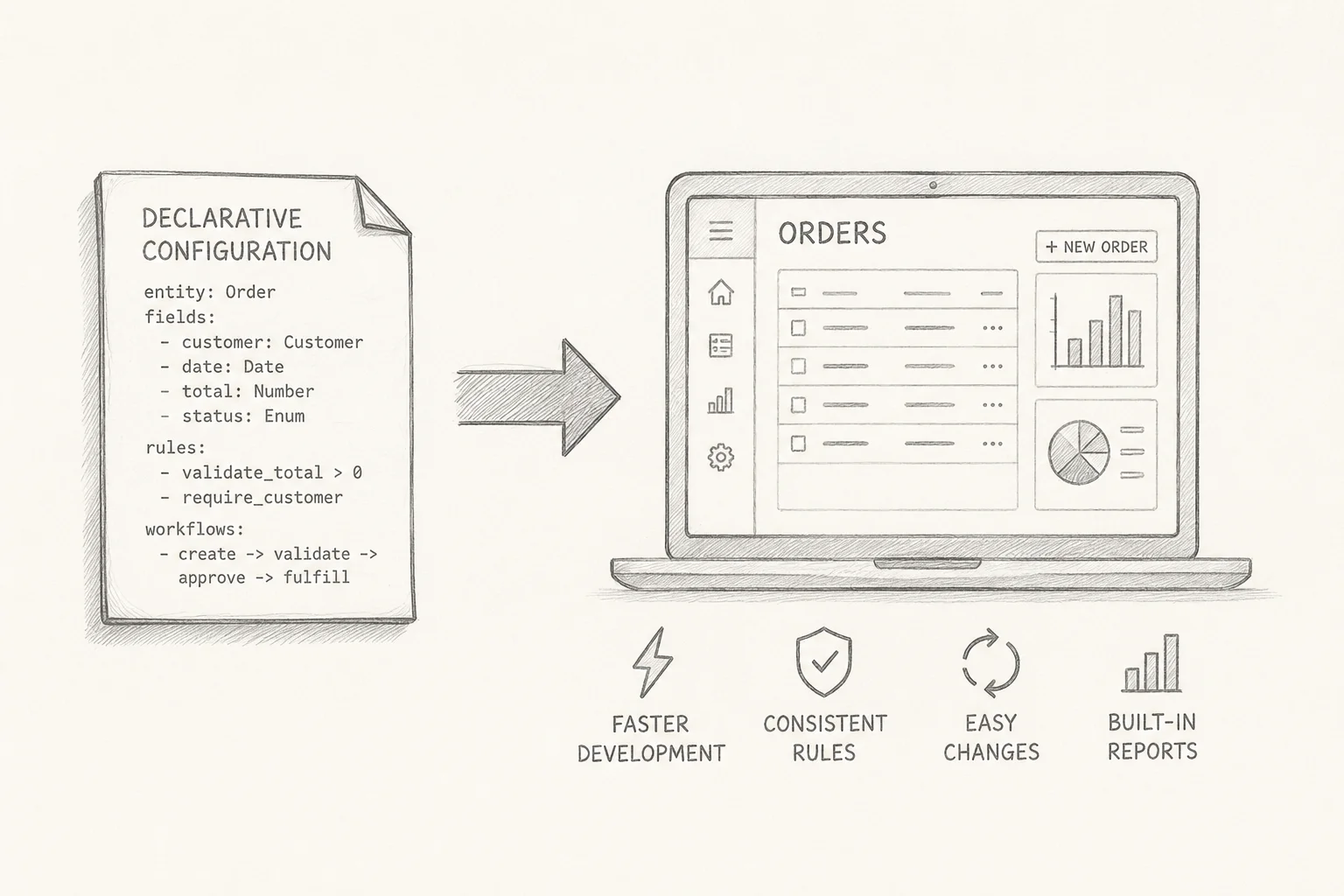
Declarative Programming for Business Applications: A New Paradigm
How declarative approaches revolutionize enterprise software development by focusing on what instead of how
Want the platform,
not just the essays?
The blog is where we think out loud. The platform is where we ship. Try a workspace on dforge.app or read the docs.